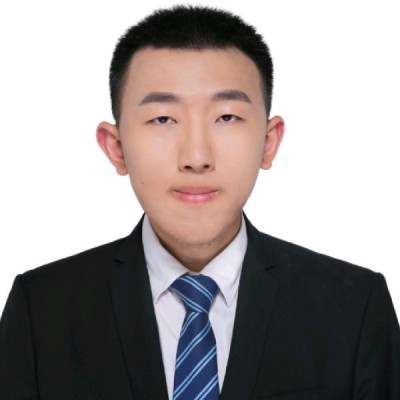
Tianyu Shi
Researcher at Gradient
Old Toronto, Ontario, Canada


Summary
👤
Senior🎓
Top SchoolTianyu Shi is a researcher and Ph.D. engineer with 8+ years bridging cutting-edge reinforcement learning, multi-agent systems, and LLM agent research with real-world AI productization. Trained at University of Toronto, McGill, UC Berkeley and MILA, he has authored 40+ publications across top venues (ICML, NeurIPS, ACL, ICRA, Nature sub-journals) and accumulated 800+ citations with an H-index of 21. He has a track record of industrial collaboration and system deployment with companies like Momenta, Megvii, and startups such as Skywork AI, complementing academic supervision and teaching experience. Tianyu maintains long-standing research partnerships with top labs (Tsinghua, Peking, MIT, DeepMind, Meta) and blends project incubation skills with large-scale AI system expertise. Notably, his background spans both transportation engineering and foundational AI, enabling cross-disciplinary solutions from autonomous driving to agent orchestration.
 8 years of coding experience
 2 years of employment as a software developer
 Visiting student researcher, Visiting student researcher at University of California, BerkeleyDoctor of Philosophy - PhD Engineering, Doctor of Philosophy - PhD Engineering at University of TorontoBachelor's degree vehicle engineering, Bachelor's degree vehicle engineering at Beijing Institute of TechnologyMaster of Engineering - MEng(thesis) Major in Transportation Engineering minor in Computer Science, Master of Engineering - MEng(thesis) Major in Transportation Engineering minor in Computer Science at McGill University
 English, German, Chinese

Github Skills (123)
benchmark10
eclipse10
traffic-simulation10
sumo10
traffic10
simulation10
transport10
svm9
motion-planning9
reinforcement-learning9
language-model8
streamlit8
autonomous-driving8
ros8
mechanics8
Programming languages (8)
Github contributions (5)
SHITIANYU-hue/COMP-767-project
Apr 2020 - Apr 2020
Contributions:48 commits, 45 pushes in 3 days
SHITIANYU-hue/Efficient-motion-planning
Aug 2019 - Oct 2021
To guarantee safe and efficient driving for automated vehicles in complicated traffic conditions, the motion planning module of automated vehicles are expected to generate collision-free driving policies as soon as possible in varying traffic environment. However, there always exist a tradeoff between efficiency and accuracy for the motion planning algorithms. Besides, most motion planning methods cannot find the desired trajectory under extreme scenarios (e.g., lane change in crowded traffic scenarios). This study proposed an efficient motion planning strategy for automated lane change based on Mixed-Integer Quadratic Optimization (MIQP) and Neural Networks. We modeled the lane change task as a mixed-integer quadratic optimization problem with logical constraints, which allows the planning module to generate feasible, safe and comfortable driving actions for lane changing process. Then, a hierarchical machine learning structure that consists of SVM-based classification layer and NN-based action learning layer is established to generate desired driving policies that can make online, fast and generalized motion planning. Our model is validated in crowded lane change scenarios through numerical simulations and results indicate that our model can provide optimal and efficient motion planning for automated vehicles
Contributions:13 commits, 12 pushes, 1 branch in 2 years 2 months
classificationmachine-learningmotion-planningneural-networksvm
Find and Hire Top DevelopersWe’ve analyzed the programming source code of over 60 million software developers on GitHub and scored them by 50,000 skills. Sign-up on Prog,AI to search for software developers.